
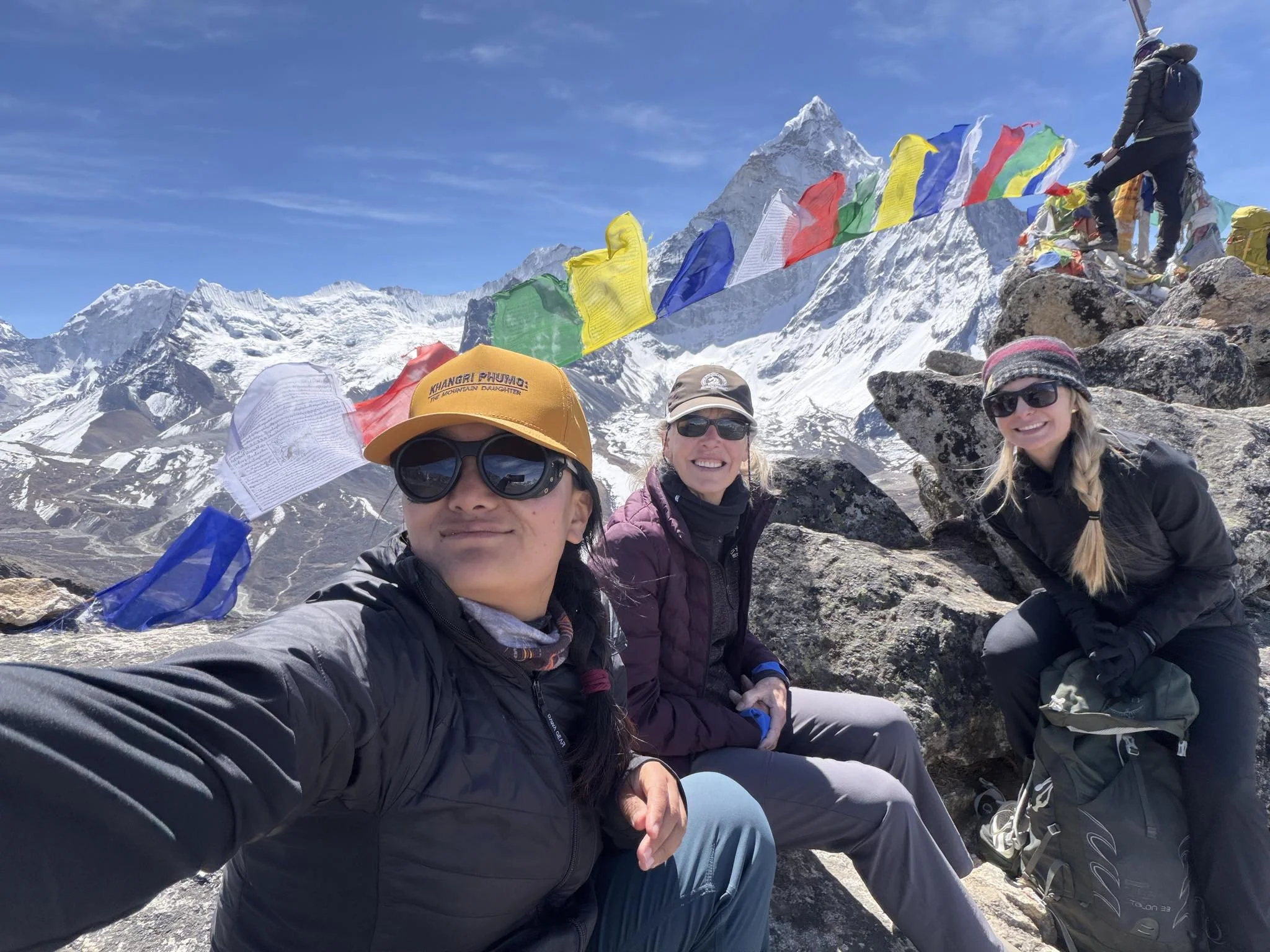
Photo credit: Mingmar Dolma Sherpa
By Amulya Sangamnerkar (edited by Marinel M. de Jesus). Training statistics organized by Yundi Hou.
High in the Himalayas, trekking is often romanticized as adventure. Travelers imagine snow-covered passes, prayer flags fluttering in the wind, and dramatic mountain landscapes stretching endlessly into the distance. But behind every successful expedition is an invisible workforce carrying the industry forward, guides, porters, cooks, and local support workers whose labor sustains Nepal’s tourism economy.
Tourism contributes significantly to Nepal’s development strategy, with trekking alone contributing 245 million dollars to the economy and supporting approximately 726,000 jobs either directly or indirectly. Yet despite the industry’s reliance on labor from mountain communities, women remain largely excluded from its most prestigious and highest-paying opportunities.
This is the reality the Himalayan Women Trail Leaders (HWTL) initiative is trying to change. HWTL is not simply a trekking workshop or a short-term leadership camp. It is a structural intervention into one of the most male-dominated spaces within Nepal’s tourism economy: high-altitude guiding and expedition leadership. The initiative recognizes the difficult truth that women are present in Nepal’s trekking industry, but they are rarely given access to the routes, visibility, networks, and professional credibility that translate into long-term economic mobility.
Only an estimated 10% of Nepal’s licensed trekking guides are women, and less than 5% are estimated to lead remote Great Himalaya Trail-level expeditions. The disparity becomes even sharper on difficult and remote routes such as Kanchenjunga, Makalu, Dolpo, Nar Phu, and Rolwaling, routes that are longer, technically harder, and financially more rewarding than commercial circuits like Everest Base Camp or Annapurna. In practical terms, on some of Nepal’s most demanding trekking routes, there may be only 1 female leader for every 20 expedition leaders.
This is where HWTL positions itself.
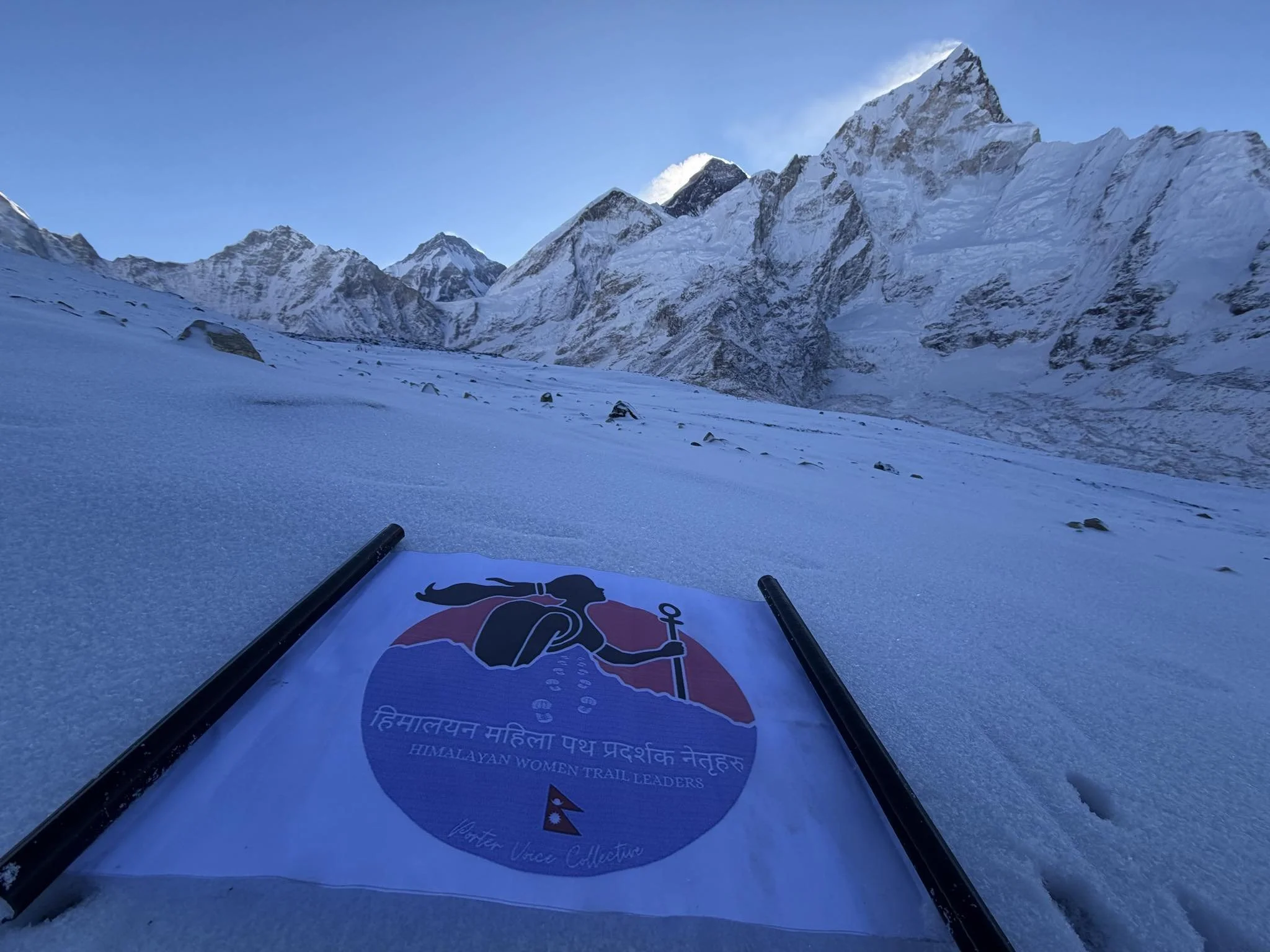
Founded by Marinel de Jesus and Mingmar Dolma Sherpa, the initiative emerged from lived experience rather than distant observation. The two women completed 7 sections of Nepal’s non-technical Great Himalaya Trail over 110 days in 2024, witnessing firsthand both the physical demands of the terrain and the structural inequalities female guides face.
The result was a first-of-its-kind leadership initiative specifically designed for female trekking guides in Nepal.
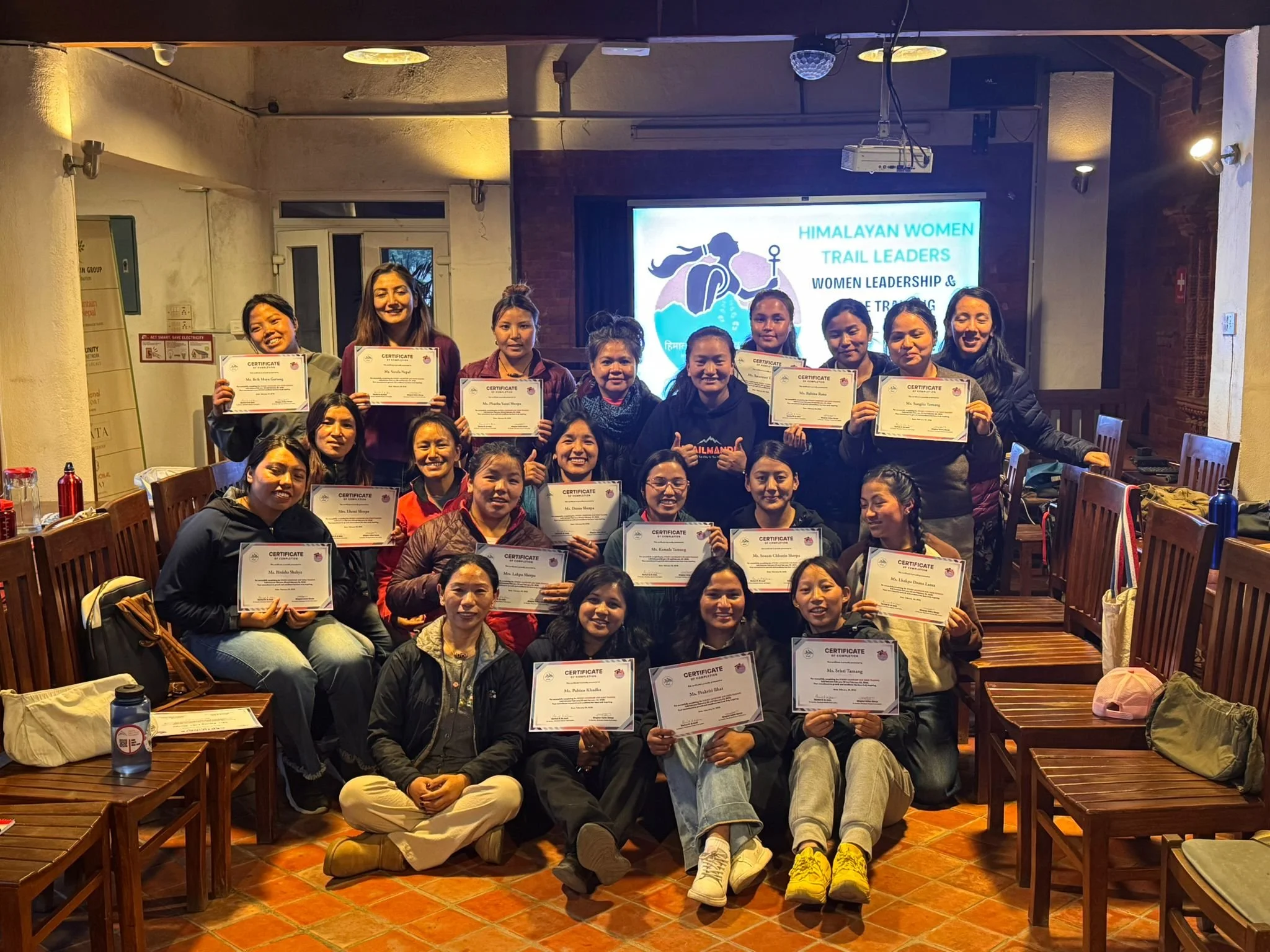
The February 2026 pilot training in Kathmandu brought together 21 women from more than 9 districts and mountain regions across Nepal. Participants ranged from 16-year-old beginners to women with over 25 years of guiding experience. Many had already guided routes through Everest, Annapurna, Langtang, Manaslu, Kanchenjunga, and Dolpo, yet still lacked access to the professional ecosystems that often determine who gets hired for elite expeditions.
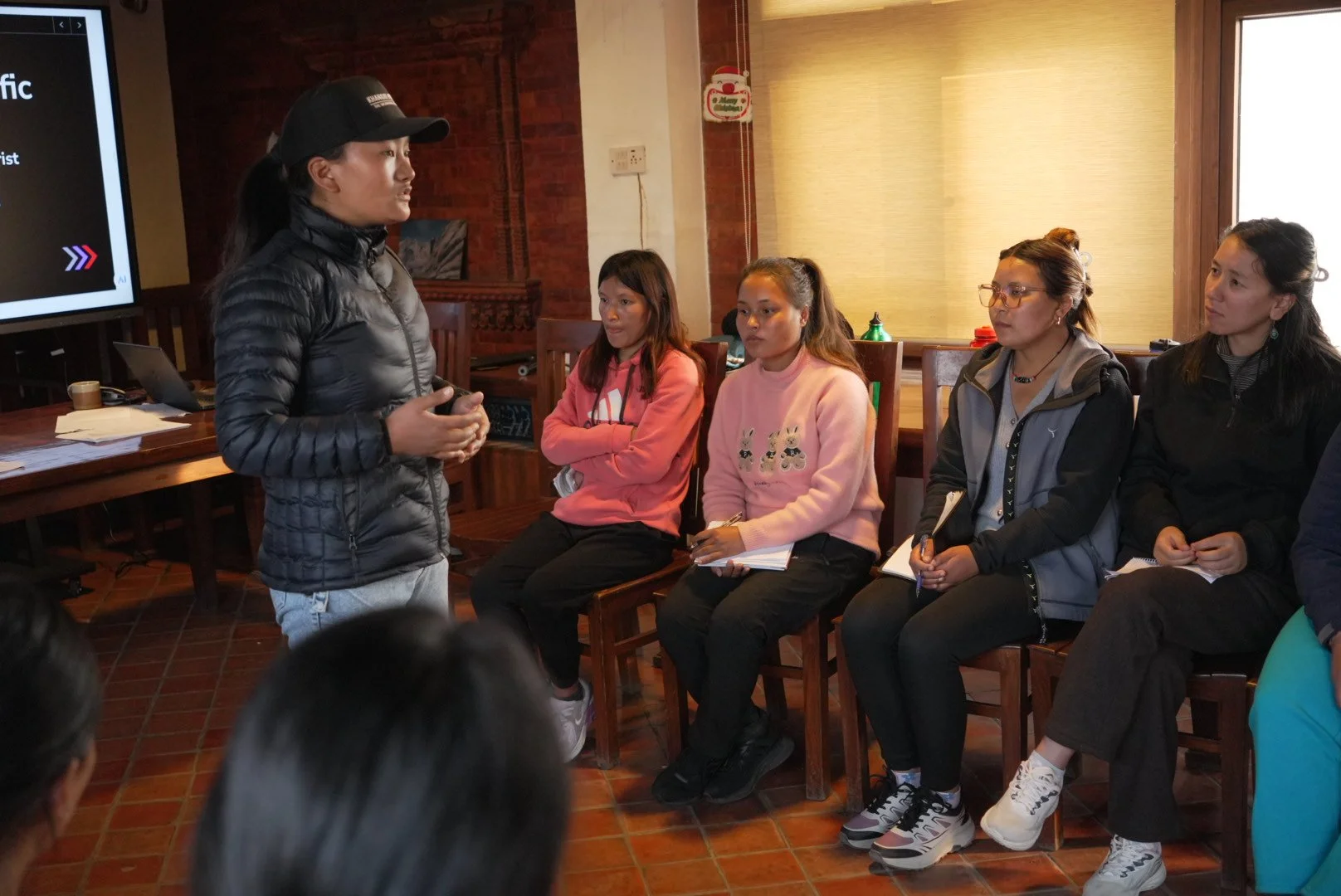
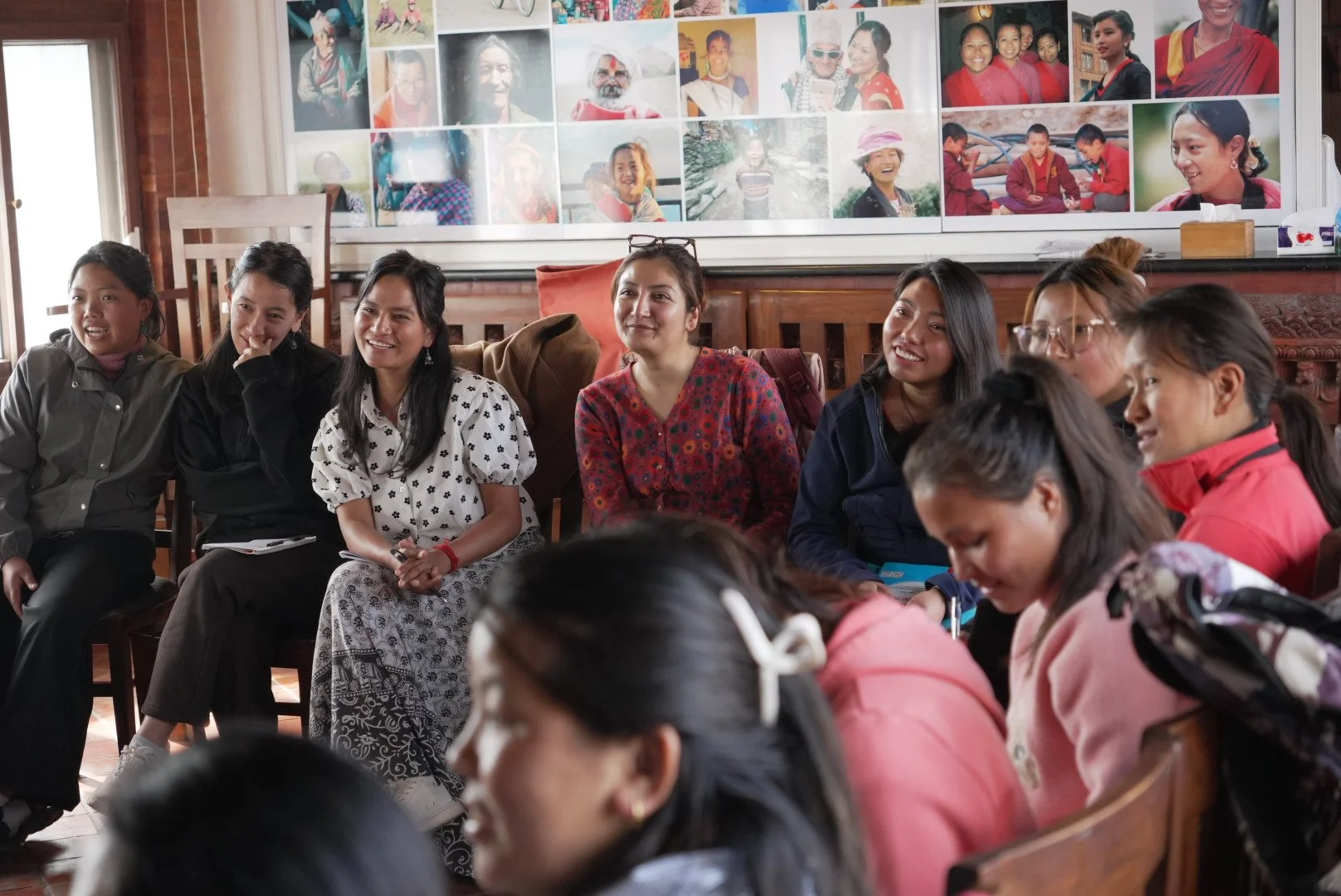
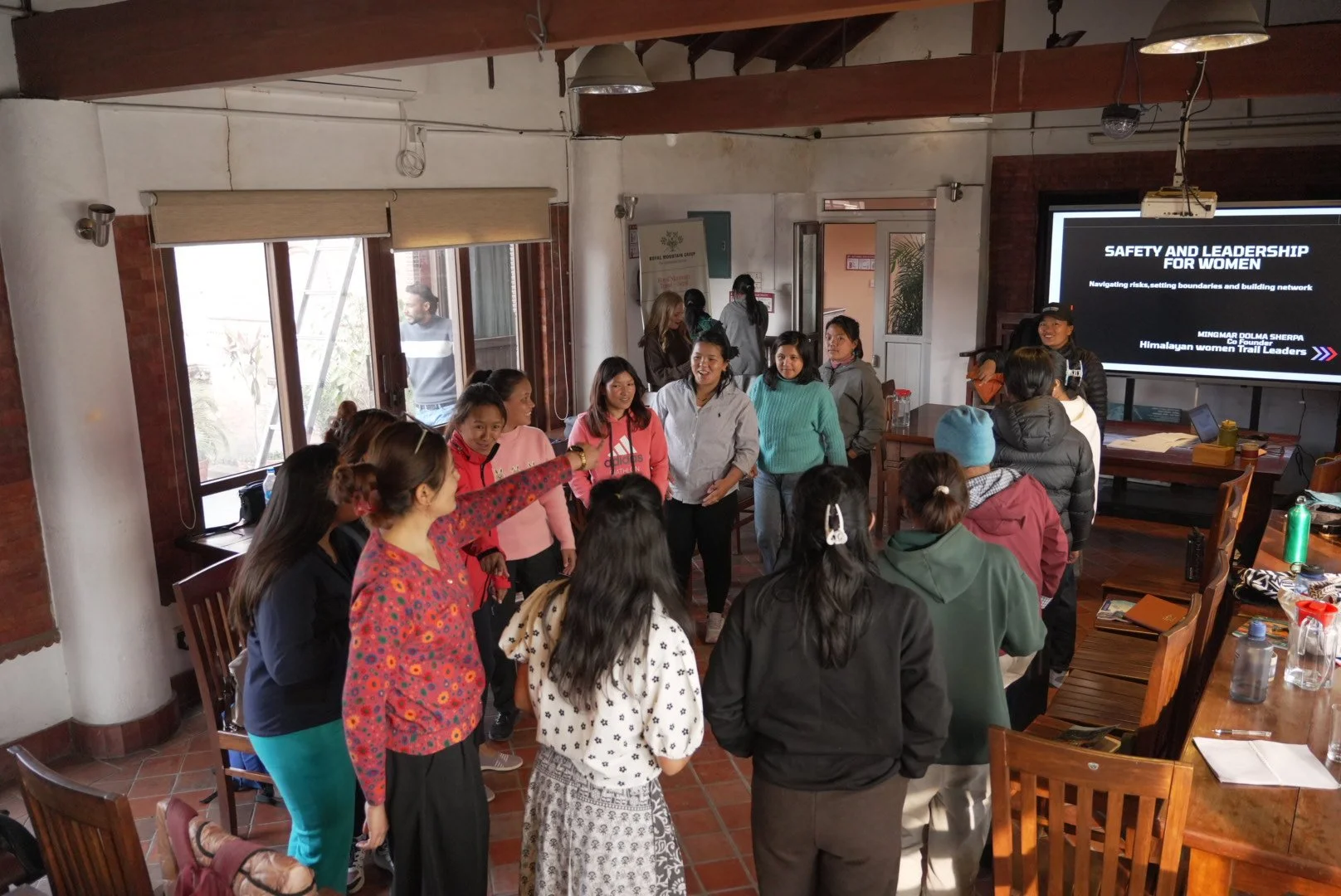
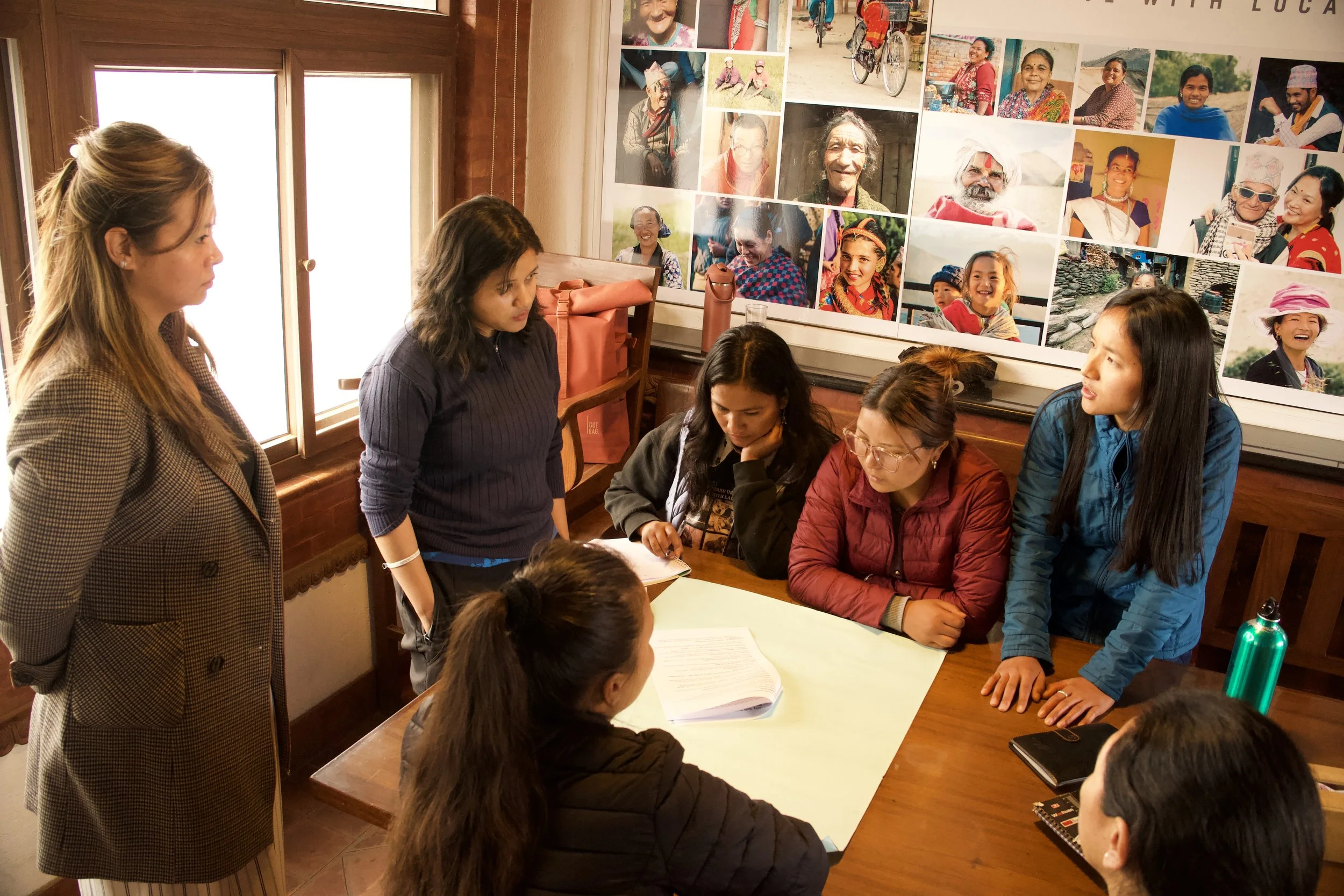
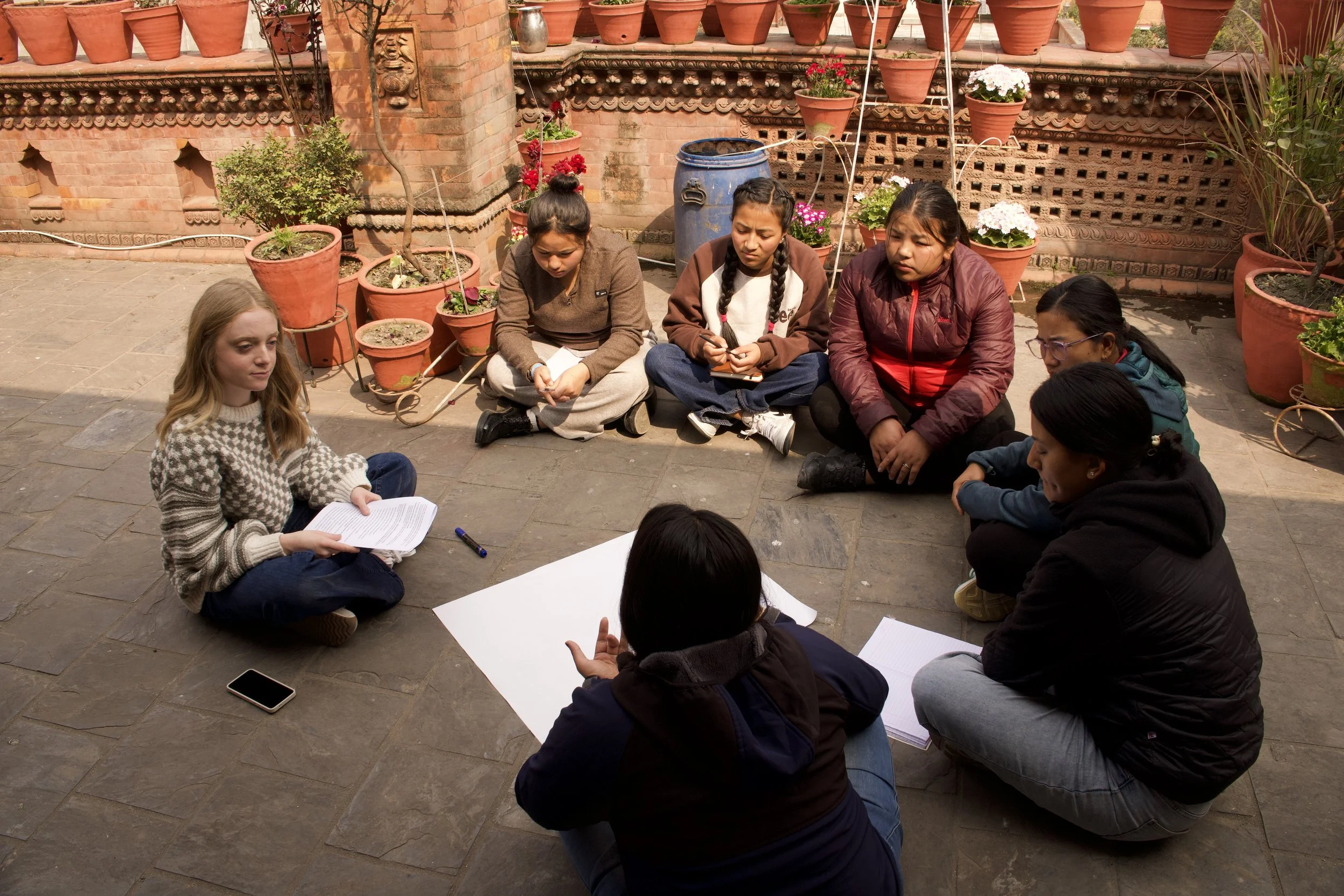
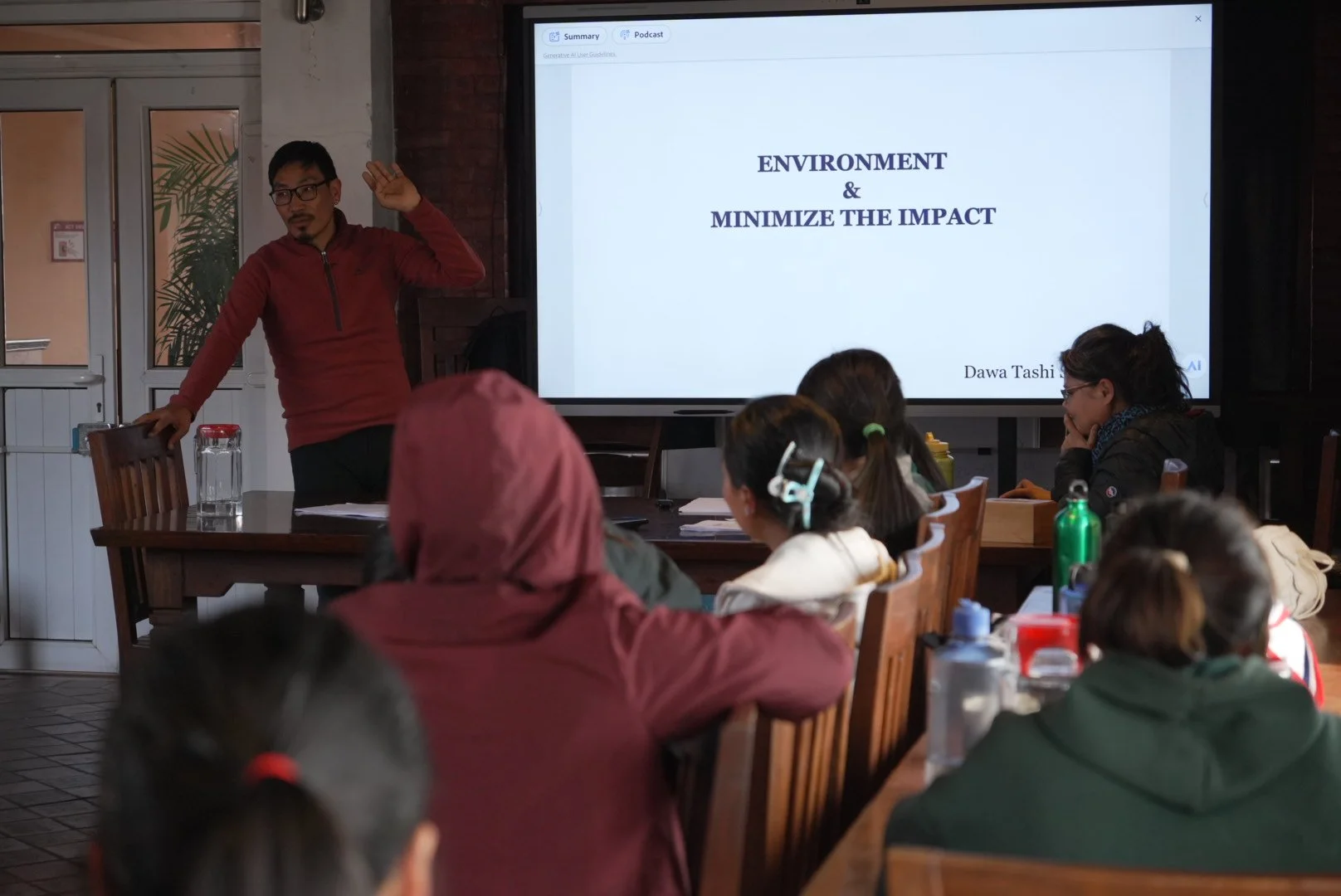
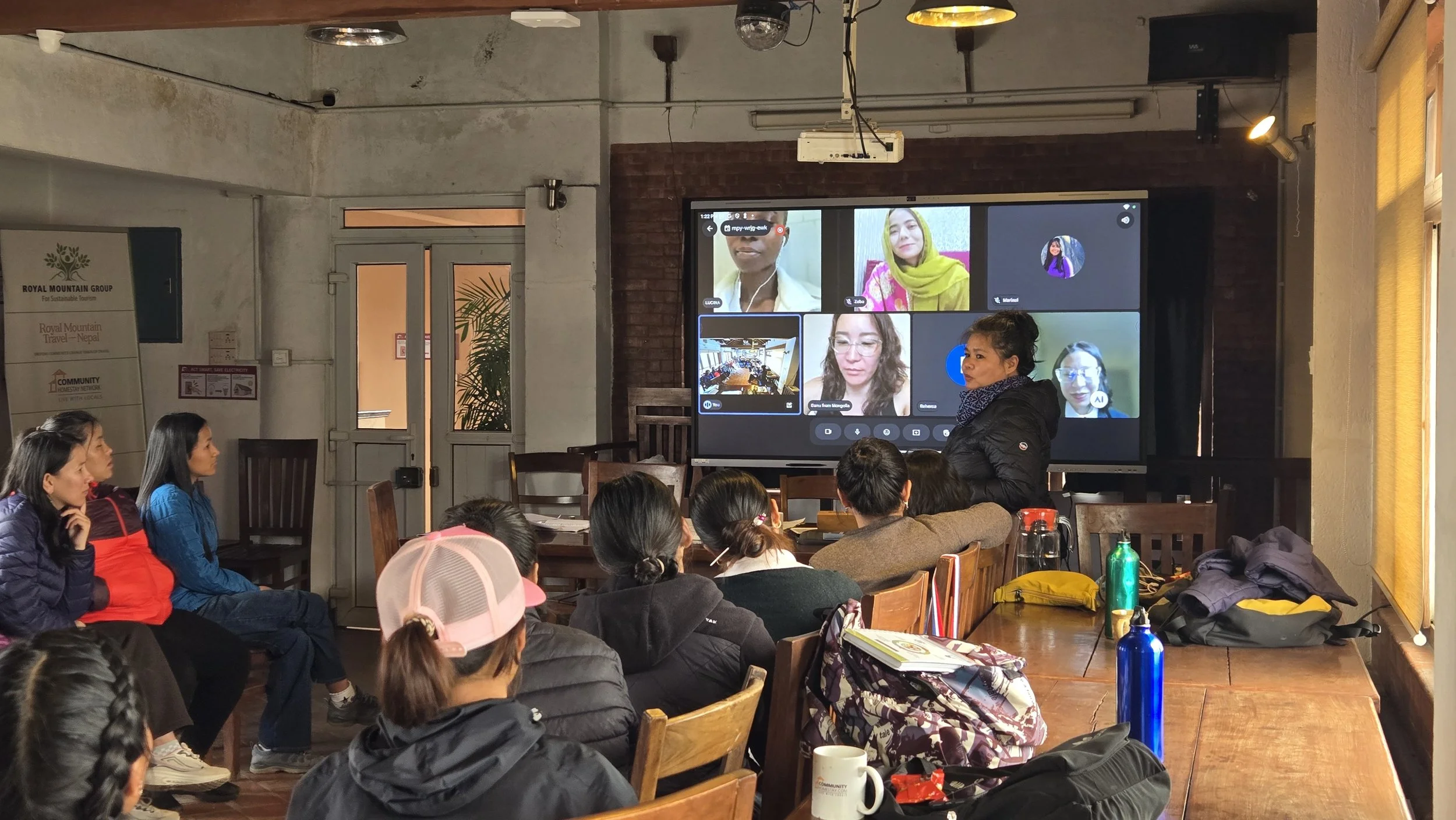
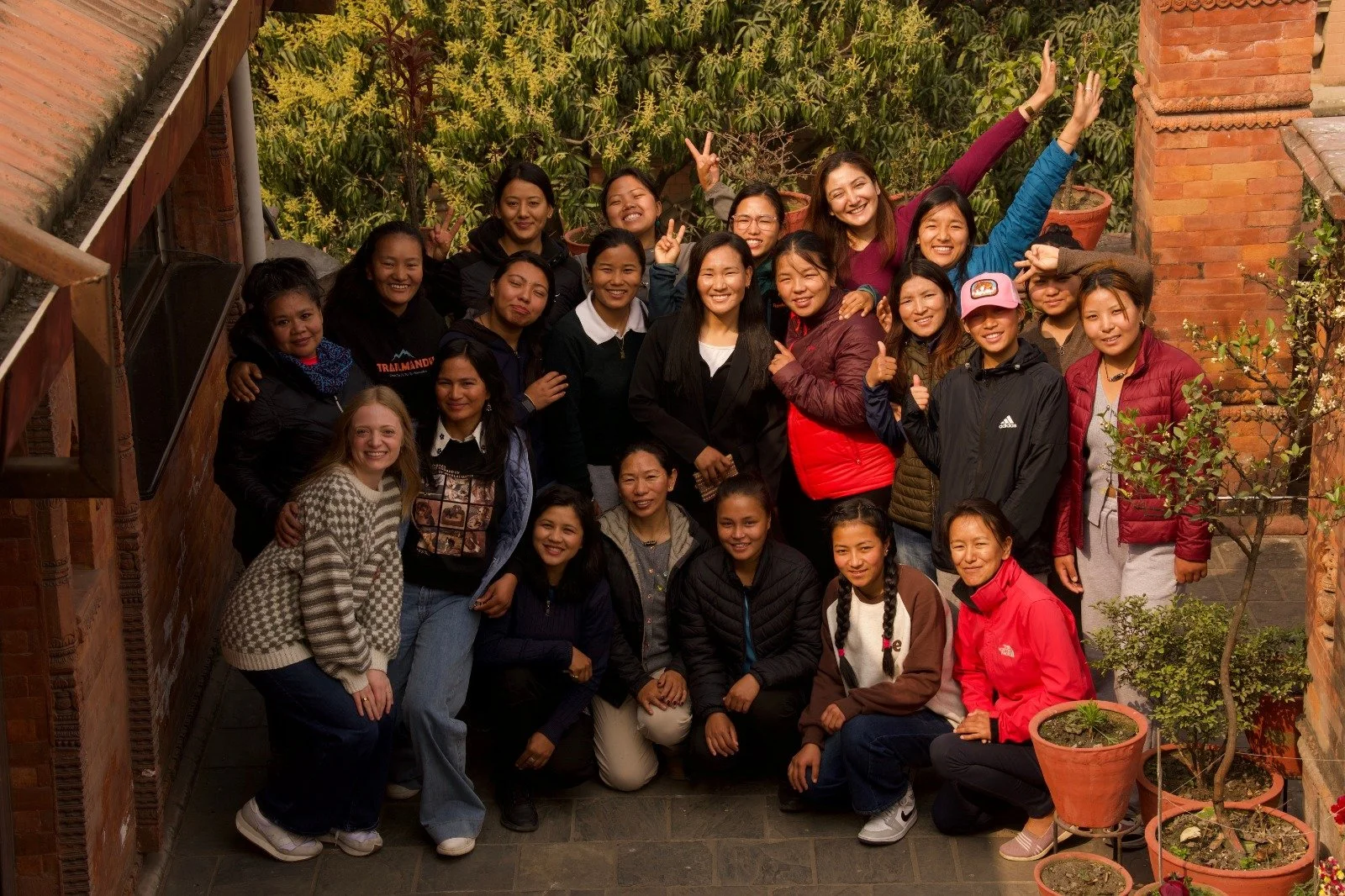
The training itself focused on leadership development, wilderness safety, public speaking, English communication, networking, advocacy, and confidence-building. But the deeper significance of the program lies in what participants valued most.
Among the 21 women selected for the inaugural cohort was Sristi Tamang, whose ambitions extend far beyond her own career.
“I want to become a confident and skillful guide, specially, a mountain guide and also promote tourism in my village and be a role model so I can help in the improvement of lifestyle and economic growth of my village people by showing them the importance and benefits of tourism industry and encouraging more people to join the industry and at the same time, showing my beautiful village to the world.”
Her words capture one of the most powerful aspects of tourism: its ability to create opportunity far beyond the individual. One trained guide can influence an entire community. For Sristi, tourism is not just a profession; it is a pathway to local economic growth, community development, and global visibility for her village.
Another participant, Shanti Dhamala, sees leadership as a way to create opportunities for other women.
“I would like to be able to lead all female trip all over Nepal and also inspire and train other females in future.”
Shanti’s vision reflects a larger shift taking place within adventure tourism. Women are no longer simply seeking access to the industry; they are seeking the authority to shape it, lead it, and mentor others into it.
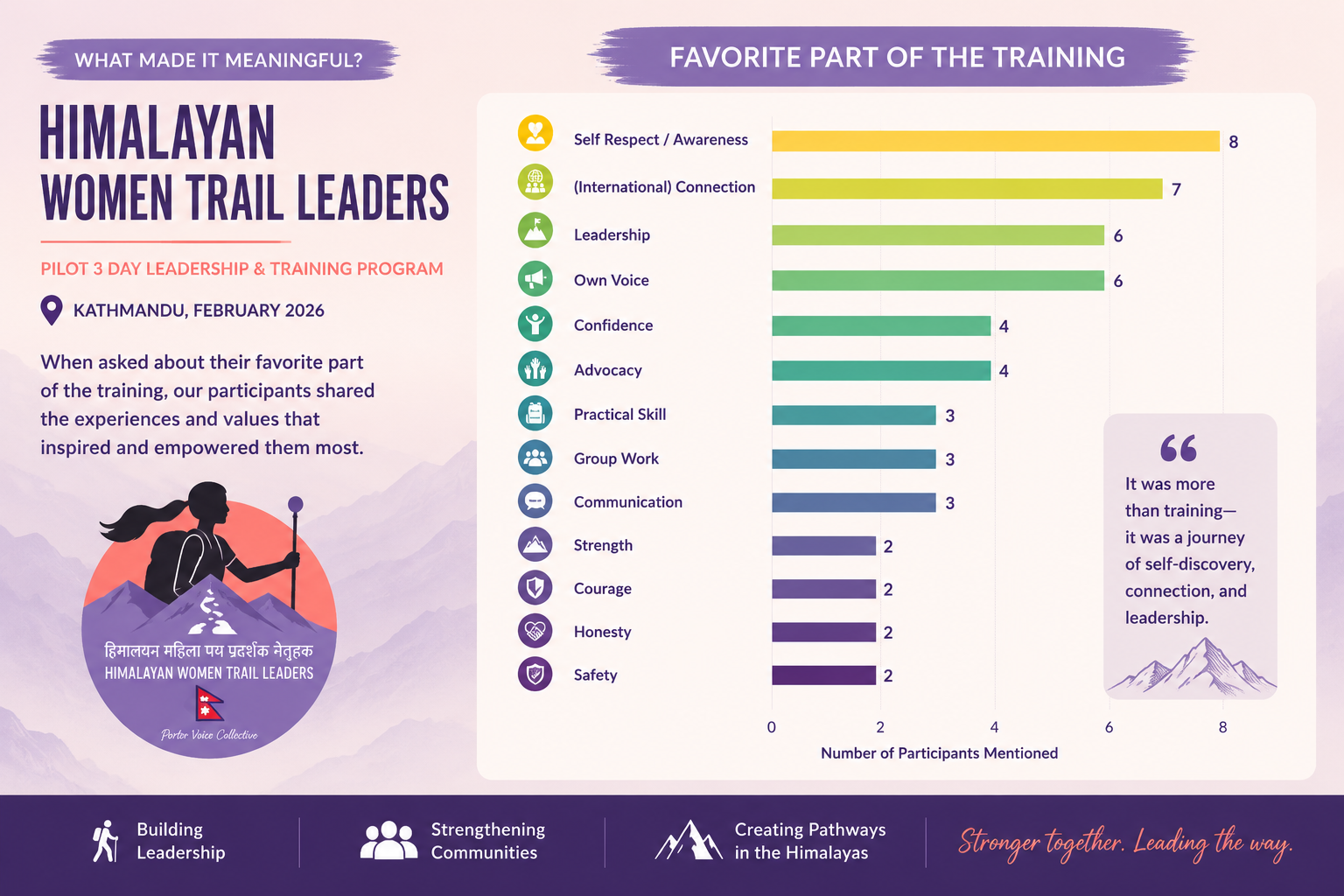
Survey findings from the pilot reveal that the most frequently mentioned takeaway was “self-respect and awareness,” highlighted by 8 participants, followed closely by international connection, leadership, and finding one’s own voice. Confidence, advocacy, communication, and practical skills were also repeatedly identified as meaningful outcomes. These findings suggest that the training functioned not only as technical preparation, but as psychological and social empowerment.
This matters because the barriers female guides face are not only physical.
Research on Nepal’s trekking industry consistently shows that women experience layered structural disadvantages shaped by patriarchy, geography, caste, and labor hierarchies. Women are often expected to remain within domestic spaces while public mobility, wage labor, and adventure tourism continue to be culturally associated with masculinity.
As a result, many female guides face skepticism from family members, verbal harassment from male coworkers, safety concerns during expeditions, and social stigma for working in public-facing tourism roles. Some women interviewed in research studies reported being told they were “not working in a proper job” or accused of earning “dirty money” simply because they traveled with trekking groups.
Tourists themselves sometimes reinforce these inequalities. Female guides frequently encounter assumptions that men are physically stronger or naturally more capable of handling remote expeditions, despite performing the same work under the same conditions.
HWTL therefore addresses something broader than skill development: legitimacy.
The initiative helps women build professional authority in an industry where competence alone is often not enough. English communication sessions improve not only language ability but also negotiation skills, confidence with international clients, and the ability to assert professional decisions clearly. Leadership training encourages women to see themselves not merely as workers supporting expeditions, but as leaders capable of running them.
The participant feedback reflects the effectiveness of this approach.
Among the 19 respondents surveyed after the training:
100% (19 out of 19) expressed interest in future outdoor training and continued involvement in HWTL programs.
Nearly 95% (18 out of 19) wanted a dedicated WhatsApp network for women leaders.
More than 84% (16 out of 19) expressed interest in future classroom training.
More than 84% (16 out of 19) wanted to contribute to the creation of a trail knowledge handbook.
More than 63% (12 out of 19) showed interest in becoming podcast interviewers or researchers.
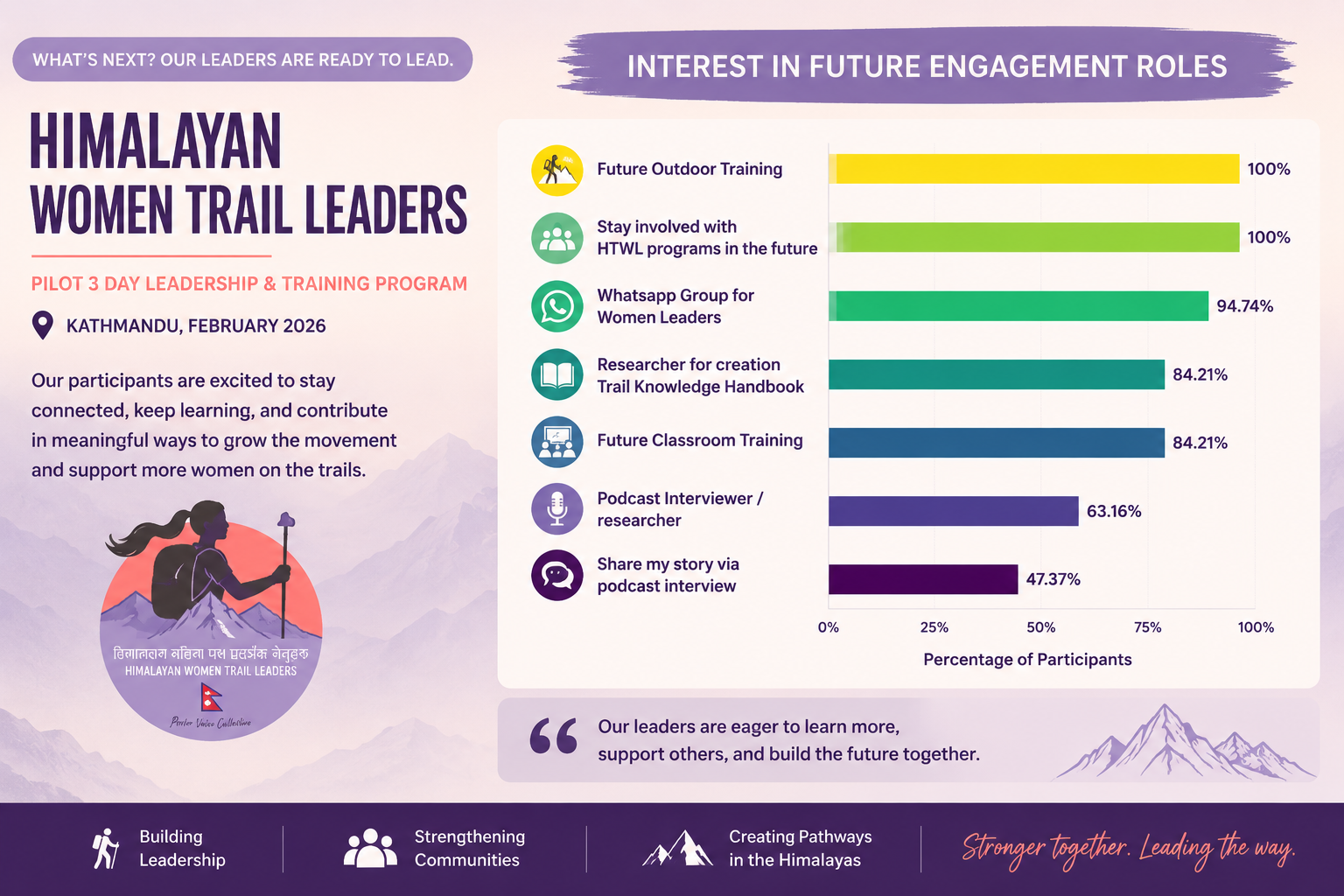
These findings demonstrate a desire not only to participate in the industry, but to actively shape its future.
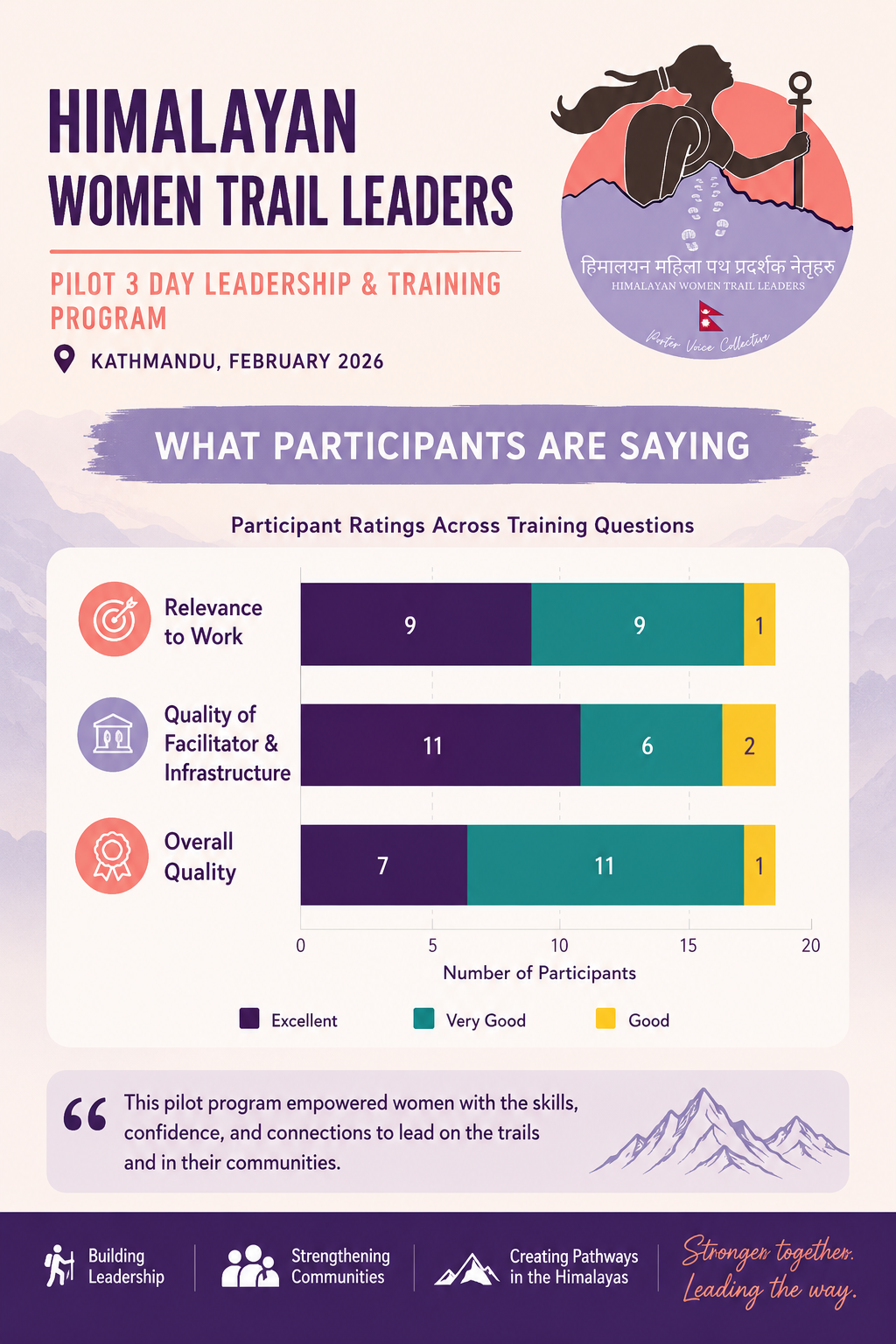
The ratings for the program itself were equally strong. Most participants rated the overall quality, relevance to work, and facilitation as either “Excellent” or “Very Good,” with almost no negative responses recorded. These results suggest that the training filled a meaningful gap within Nepal’s trekking ecosystem — one that traditional industry structures have largely failed to address.
What makes these findings particularly important is that they challenge a common assumption in development discourse: that economic participation alone creates equality.
Research consistently shows that women may be formally included in industries while still remaining excluded from leadership, decision-making, and higher-income opportunities. Employment without authority often reproduces existing inequalities rather than dismantling them.
HWTL appears to recognize this distinction clearly.The initiative combines practical training with psychological empowerment, professional networking, advocacy, and long-term community-building. It treats women not merely as beneficiaries of development, but as future leaders within Nepal’s mountain tourism economy.The long-term implications extend beyond individual guides.
For women in mountain communities, guiding can create financial independence, delayed marriage pressures, increased mobility, and stronger bargaining power within households. For local economies, greater female participation in tourism creates more resilient income systems in remote regions heavily dependent on seasonal work. If each of the 21 women trained through the pilot program inspires even 5 additional women to join the industry, the initiative could potentially influence more than 100 future female tourism leaders in the coming years.For the tourism industry itself, expanding women’s leadership strengthens the talent pipeline while challenging outdated assumptions about who belongs in high-altitude expedition culture.
The initiative also addresses a growing demand from female travelers worldwide. Women now account for about 64% of adventure travel clients globally and 71% of solo travelers (40+ Female Travel Statistics and Trends [2026] - Hotelagio), yet opportunities to be led by female guides on long-distance Himalayan expeditions remain limited. HWTL openly argues that women trekkers should have the option to be led by women on long-distance Himalayan expeditions, something that remains rare despite increasing global participation by women in adventure travel.
Ultimately, the significance of HWTL lies in what it symbolizes. The mountains of Nepal have always depended on women’s labor, whether visible or invisible. Women have carried loads, supported families, maintained communities, and contributed to mountain economies for generations. Yet leadership on the trail has remained overwhelmingly male.
HWTL challenges that imbalance directly.
It asks a powerful question: if women are already surviving these mountains, supporting these economies, and doing this labor, why should access to leadership, recognition, and opportunity remain restricted?
Its answer is simple. It shouldn’t.
The first HWTL cohort consisted of just 21 women. In numerical terms, that may seem small. But transformative change often begins with small numbers. One woman becomes a guide. One guide becomes a leader. One leader inspires a village. One village changes perception. And eventually, an entire industry begins to look different. That is the promise of the Himalayan Women Trail Leaders initiative — not simply creating more women on the trail but creating more women leading it.
To learn more about our programming and future initiatives, see our Initiative Brief and Program Evaluation report.
Be part of the change and support future HWTL trainings by donating here. Follow us on IG and Facebook - @himalayanwomentrailleaders
Interested in partnership/collaboration? Email us - theportervoice@gmail.com